
General Updates
Viking Amber
Nov
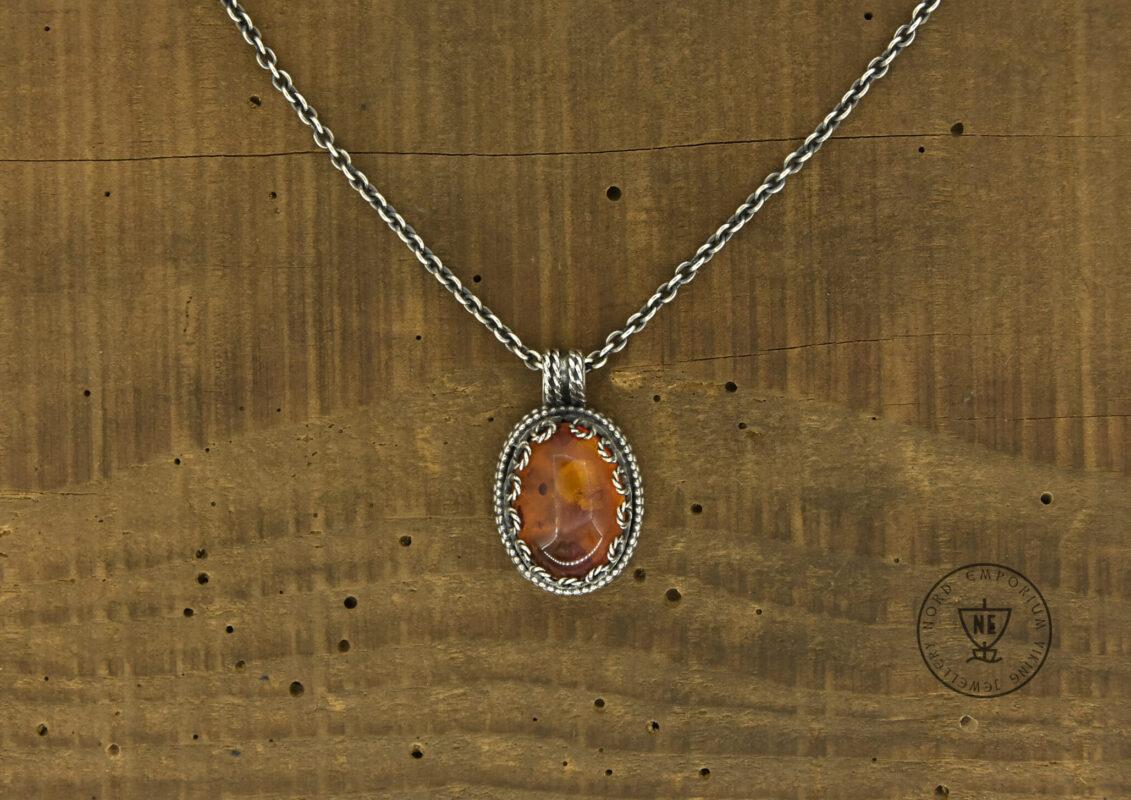
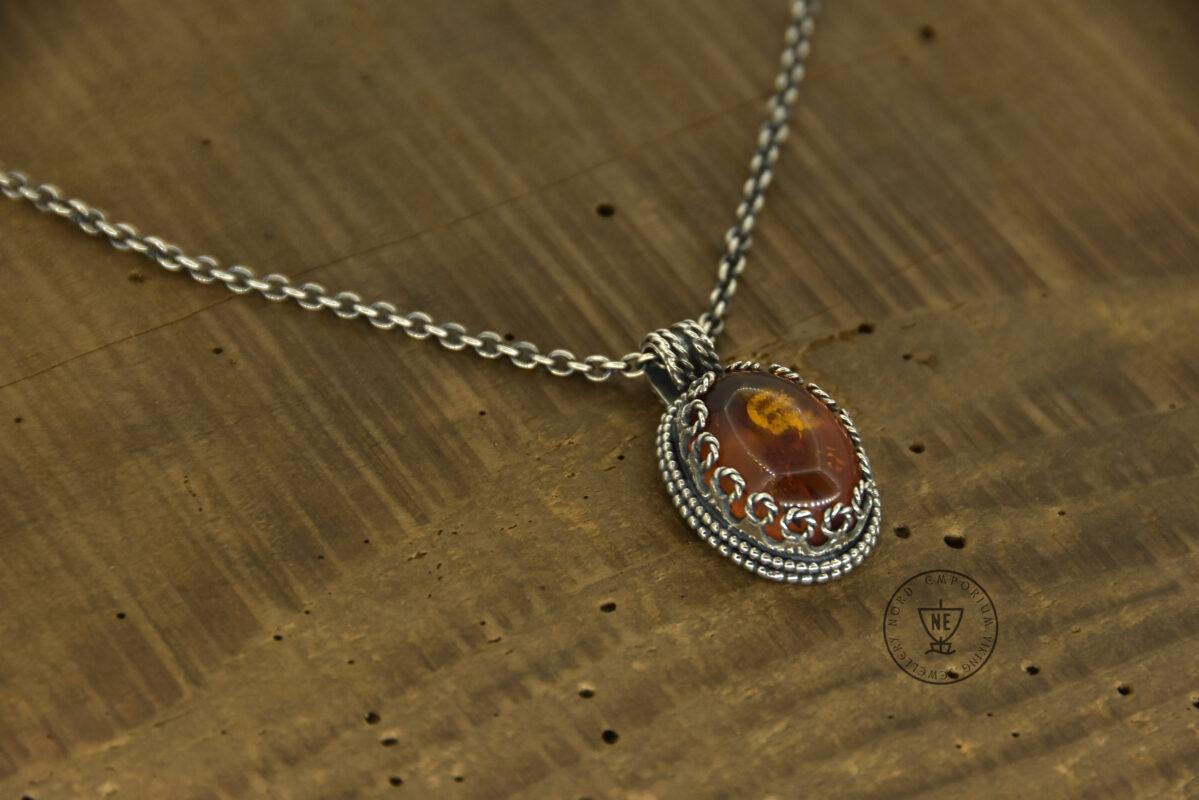
Based on Hedeby pendant from Southern cemetery chamber grave No.5 Viking Amber
Baltic amber or succinite is amber from the Baltic region, home of its largest known deposits. It was produced sometime during the Eocene epoch, but exactly when is controversial. It has been estimated that this forested region provided the resin for more than 100,000 tons of amber. Today, more than 90% of the world’s amber comes from Kaliningrad Oblast of Russia. It is a major source of income for the region; the local Kaliningrad Amber Combine extracted 250 tonnes of it in 2014 and 400 tonnes in 2015. Baltic amber is also found in Poland, as well as the Baltic states.
Bitterfeld amber from the brown coal mines near Bitterfeld in Germany was previously thought to be redeposited Baltic amber, but is now known to be chemically distinct, though like with Ukrainian Rovno amber, it is thought to have been deposited around the same time as Baltic amber.
Because Baltic amber contains 3–8% succinic acid, it is also termed succinite.
Amber was a highly valued commodity during the Viking Age, prized for its beauty, rarity, and symbolic significance.
Known as “Nordic gold,” it was a cornerstone of Viking trade, fueling economic growth and cultural exchange across Europe and into the Middle East.
The Baltic region was the primary source of amber, which was harvested from the shores of the Baltic Sea and traded extensively through networks that connected Northern Europe with the Mediterranean, Egypt, and regions as far as China and India.
Vikings used amber to create a wide range of jewelry and decorative objects, including beads, pendants, bracelets, brooches, and finger rings.
Archaeological finds from sites like Jorvik (York) and Birka in Sweden reveal that amber was often imported as raw material and then crafted locally, with evidence of manufacturing waste indicating active workshops.
The material was also used to make symbolic items such as Thor’s hammers, reflecting its integration into Norse religious and cultural practices.